RonPrice's Journal


25
Feb 2012
8:28 PM EST
   

FOOTY and BASEBALL

On the ninth day of spring, just yesterday, I attended the first footy game in a big stadium in Australia-at York Park in Launceston.  I had lived in Australia for 36 years and two months--nearly 60 per cent of my life; I had watched parts of several games on small ovals across Australia and, of course, seen dozens of parts of games on TV.  But I don’t think I had ever watched an entire game.  I was married to a big football fan and having a son and two step-daughters who also enjoyed the game, it was difficult to escape its regular sound in our home for six months of the year, especially at the weekend.  Given the centrality of this game to the Aussie ethos, I felt my attendance and what it involved deserved a prose-poem to mark the occasion even though I only watched part of the game and even though it was only for the under 14s.  But the game was a grand final in the NTJFL, the northern Tasmania Junior Football League, my 14 year old step-grandson, Tobias Wells, was playing and my wife saw that it was an essential part of my grandfatherly role to attend.-Ron Price, Pioneering Over Four Epochs, 10 September 2007.
 
Back in what many saw as the quiet fifties, my attention, my spiritual and physical resources, my curiosity, was channelled into sport, school and an emerging interest in the opposite sex.  The energies of this young child and adolescent who had just begun the long race of life were, indeed, stretched to the full during those halcyon days by activities having little to no connection with any organized religion.  Organized religion in any form has not been a popular activity in Australia and Canada, at least in the places where I have lived all my life, although certain evangelical-fundamentalist groups did attracted large followings.
 
The following poem tells a little about one of the sports, baseball, its context in my life, in modern history and this new Faith whose connection with my life was a largely peripheral one during the years of my childhood and early to mid-adolescence.   I wrote the following poem six weeks before leaving the classroom and retiring from employment as a teacher at the age of 55 in 1999.  So often in life I felt strongly that I just could not stay any longer in a place—a town or a city--in a work situation, in a marriage or in any one of the multitude of other relationships one can have in life. For one reason or another I just had to go, had to split, as we used to say colloquially. Sometimes the reason was obvious; sometimes it was inexplicable; sometimes the choice was not mine.
 
In 1953/4 I felt strongly that I had to leave softball for hardball and third base for the mound, the role of pitcher. In 1950 I had to leave our house in RR#1 Burlington. The former was my choice; the latter had nothing to do with me. Such is part of the nature of fate, determinism and free will. In August 1962, at the age of 18, I played my last game of hardball in the juvenile league for the Burlington All-Stars.  I pitched a full nine innings in that game and in the bottom of the ninth I was hit for three runs and we lost the game 3 to 1. The next week my family moved to another town and the next summer I worked for the Firestone Tire and Rubber Company to make money to go to university and did not play another game of baseball until I was 39 and lived in Katherine, Northern Territory, where is was so hot that after a few innings in one game I gave it up with an excess of sweat on my brow as a lost cause.
 
When a series of programs about baseball, a series called The Big Picture, began to unfold on television, I quickly came to realize the remarkable similarity between the story of baseball and the story of the Baha’i Faith, both of which grew up in the modern age. The game of baseball was born in America in the 1840s as a new activity for sporting fraternities and a new way for communities to develop a more defined identity.1   Indeed, there are many organizations, activities, interests which were born and developed in this modern age, say, since the French and the American revolutions.  The points of comparison and contrast between the great charismatic Force which gave birth to the Baha’i Faith and its progressive institutionalization on the one hand, and the origin and development of other movements and organizations on the other, is interesting to observe. I wrote the poem which follows about seven weeks before teaching my last class as a full-time Tafe teacher in Australia. -Ron Price with thanks to Ken Burns, “The Big Picture: Part Two,”  ABC TV, 18 February 1999; and 1John Nagy, “The Survival of Professional Baseball in Lynchburg Virginia: 1950s-1990s,” Rethinking History, Vol.37.
 
They both grew slowly
through forces and processes,
events and realities
in the late eighteenth
and nineteenth centuries:
baseball and the Baha’i Faith
along their stony and tortuous paths,
the latter out of the Shaykhi School
of the Ithna’Ashariyyih Sect
of Shi’ah Islam.
 
And it would be many years
before the Baha’i Faith would climb 
to the heights of popularity
that baseball had achieved
quite early in its history.
 
Baseball was a game
whose time had come,
a hybrid invention,
a growth out of diverse roots,
the fields and sandlots of America,
as American as apple pie.
 
And the Baha’i Faith was an idea
whose time had come, would come,
slowly, it would seem, quite slowly
in the fields, the lounge rooms,
the minds and hearts
of a burgeoning humanity
caught, as it was, as we all were,
in the tentacles of a tempest
that threatened to blow it--
and us--apart.
 
Ron Price
17 February 1999
 
A second poem about baseball, written about a year after retiring from full-time teaching to Tasmania, where I lived in its oldest town, George Town---also conveys something of the flavour of those ‘warm-up days until I was 18 when my curiosity about this new religion was exceeded by curiosity about other things.
 
A BASEBALL-CRAZY KID
 
In October 1956 Don Larsen of the New York Yankees pitched the only perfect game in post-season baseball. Yogi Berra was the catcher.1  That same month and year R. Rabbani advised Mariette Bolton of Orange Australia, in the extended PS of her letter, that it was “much better for the friends to give up saying “Amen.”2  The following year Shoghi Effendi died and Jackie Robinson, the first Negro to play professional baseball, retired.  I was completing grades 7 and 8 when all of this took place and, even at this early age, was in love with at least three girls and possibly four in my class: Carol Ingham, Judy Simpson, Karen Jackson and Susan Gregory.  I found them all so very beautiful.  Karen was the first girl I kissed.3  -Ron Price with appreciation to:1"The Opening of the World Series: 2000," ABC TV; 2Messages to the Antipodes, Shoghi Effendi, editor, Graham Hassall, Baha’i Publications Australia, 1997, p.419; and 3Ron Price, Journal: Canada: To 1971: 1.1, Photograph Number 102.
 
I was just starting grade seven
and still saying amen
occasionally when I went
to that Anglican Church
on the Guelph Line
in Burlington Ontario
with my mother and father
and saying grace
just as occasionally.
 
I watched the World Series,
a highlight of autumn
for a twelve year old
baseball-crazy kid, back then.
And I passed the half-way point
of my pre-youth days1
when I was the only kid
with any connection
with this new world Faith
in these, the very early days
of the growth of a Cause
in the Dominion of Canada,2
a Cause that contained the seed
for a future world civilization.
 
1953 to 1959: my pre-youth days.
2 In 1956 there were only about 600 Baha’is in Canada.  The 400 Baha’is that started the Ten Year Crusade in 1953 in Canada became 800 by the time I became a Baha’i in 1959. In southern Ontario, from, say, Oakville to Niagara Falls and Windsor, to several points north of Lakes Ontario and Erie in 1956 I was the only pre-youth whom I then knew, or later came to know.  There may have been other pre-youth but at this early stage of the growth of the Cause in Canada, year fifty-eight of its history, I was not aware of them.—See Canada’s Six Year Plan: 1986-1992, NSA of the Baha’is of Canada, 1987, p.46.
 
Ron Price
23 October 2000
_________________________
Add Comment:

Add Tags:
To add multiple tags, please separate them with comma ( , )


24
Feb 2012
8:16 PM EST
   

THE SUMMER OF ‘37: MY LIFE IS MY WORK

About ten weeks after I joined the Baha’i Faith the film Suddenly Last Summer was released. It was just at the start of the Christmas holidays. I was in the middle of grade 10 in a small town in Ontario’s Golden Horseshoe. I won’t tell you about the town, about that part of Ontario where I lived until my early 20s, or about the film since you can easily research all of this with a little effort in cyberspace.

One of the lines, the quotations, from the film, though, was: “Strictly speaking, his life was his occupation. Yes, yes, Sebastian was a poet. That's what I meant when I said his life was his work because the work of a poet is the life of a poet, and vice versa, the life of a poet is the work of a poet. I mean, you can't separate them. I mean, a poet's life is his work, and his work is his life in a special sense.”1

I would not have appreciated those lines back in 1959 immersed as I was back then: in sport, in my studies, in the more accessible beauties than the ones in the film,2 in the small world of my family and friends and in the new religion my family had become involved with by the late 1950s.2 -Ron Price with thanks to 1IMDb Website and Wikipedia; 2Elizabeth Taylor and Katharine Hepburn starred in this film and won Oscars for their acting, 24/2/’12.

You were so very successful,
Tennessee,1 but what a grim
life you had; I’ve had quite an
easy trot compared to yours.
 
Set in the summer of 1937 at
the start of the Baha’i Seven
Year Plan…..little did anyone
know back then or even now.2
 
With the world getting ready
for another war…..they were
grim times for that grim story.3
 
Those words about a poet have
certainly come true for me now
in the evening of my life: my life
is my work & my work is my life.

1Theatre scholar Charlotte Canning of the University of Texas at Austin, where Williams' archives are located, has said, "There is no more influential 20th-century American playwright than Tennessee Williams. He inspired future generations of writers, and his plays remain among the most produced in the world."
21937-1944: the first organized teaching plan of the Baha’is of North America.
3 Michael D. Klemm,“Who's Afraid Of Sebastian Venable?” in CinemaQueer.com, December 2008.

Ron Price
24/2/’12

Add Comment:

Add Tags:
To add multiple tags, please separate them with comma ( , )


23
Feb 2012
8:30 PM EST
   

EDWARD WOODWARD: “Between Two Eternities”

Edward Woodward(1930-2009) died today.  He was born in Croydon, Surrey which, in 1965, became a part of Greater London.  It is the town where my grandfather was born in 1872.  We both had working-class parents. But it is there that a comparison between Woodward and me ends. He became one of England’s finest actors in the last half of the twentieth century. He was also a singer with a dozen albums and an author.  His 300 page memoir, One Brief Interval,(1) makes a good read. I, on the other-hand, became famous in micro-worlds, in classrooms across two continents, as a teacher.  I also became a Bahá'í.
 
Woodward started his acting career at the age of 16 in 1946.  At 16 I was in grade 11.  In his teens he aspired to being a professional footballer.  I aspired at that young age to being a professional baseball player. I won’t summarize the many highlights and achievements of Woodward’s career which readers can easily read about at Wikipedia(2), the online encyclopedia; nor will I summarize my life since the age of 16 in 1956.  This prose-poem will serve as a quasi-eulogy, a reminiscence, a reflection on a life, a life that existed beside mine in the world of celebrity, a world which exists beside all of us in the West, we who live with print and electronic media and their many and variegated forms. -Ron Price with thanks to (1) Miegunyah Press, Melbourne, 2005; and (2) Wikipedia, 16 November 2009.
 
It’s been quite a ride, eh Edward?
World War 2 starting when you
were only 9 and many more wars
since, eh? You seemed to weather-
it-all pretty well, Edward, as you
enriched the lives of millions with
your talents: your cool tenor voice.
 
There’s more to celebrity than just a name;
that’s for sure, eh Edward? I wish you well
wherever you are now: be it in oblivion----
a pretty safe place; or in your incarnated---
role wherever that may be; or in the world
beyond, that Undiscovered Country, between
two eternities, as you called it, Land of Lights,
as some call it.  They will be different lights
than the ones you enjoyed on the stage and
screen here on this earthly plane, Edward....
 
May you now enjoy days of blissful joy and of
heavenly delight in some garden of happiness,
beholding new splendours on lofty mounts that
the pen cannot tell nor the heart recount to us
who still labour in this petty pace from day to
day to the last syllable of our recorded time....
 
Your candle has gone out, Edward. No more
strutting and fretting your hours. You will be
heard no more—here.  But this tale, your life,
is not a story told by an idiot, full of sound &
fury, signifying nothing. What say you now,
Edward, what say you now in the language of
THERE?
 
Ron Price
17 November 2009
 
PS (1)There are many excellent lines from Woodward’s memoir, lines like:
 ‘Childhood is measured out by the sounds and smells and sights before the dark of reason grows.’(p.3)
(2) ‘Leaving aside God and heaven, there is still much good teaching in religion, whether it is Christian, Jewish, Buddhist, Muslim, Aboriginal or any other’. The last chapter of Woodward’s memoir returns to the idea of life as “a brief interval between two eternities.”
 
Add Comment:

Add Tags:
To add multiple tags, please separate them with comma ( , )


21
Feb 2012
8:41 PM EST
   

UNDER THE CYPRESS TREES: THE BRILLIANT FIRST CEN

Bryn and Sherna Deamer, the chief librarian and the head of the publishing section in the Bahá'í World Centre library gave my wife, my son and I a private tour of the Baha’i Cemetery in the late afternoon of Friday 9 June.  It is a cemetery where Universal House of Justice members, Hands of the Cause and several workers at the World Centre lie buried.  I found the experience very moving because I had come to know so very many of the people who had passed away and who were buried in that place--not personally of course but through living in the first century of the Bahá'í Faith’s Formative Age(1921-2021) and studying its history.  I felt a closeness to many of these men and women.  It was the only place where I was moved to tears during my pilgrimage. -Ron Price, Pioneering Over Three Epochs, 9 June 2000.
 
So many familiar names here
under yet more cypress trees:
the Revell sisters’ final resting place;
and there’s Elizabeth Martin’s stone:
I knew her well, well not that well;
And there’s old Esslemont, well, not
that old really: died at only 51!
 
Quite a galaxy of servants to this Cause:
an elite cadre!  And a nicely kept place:
simple, small, accessible, not your orgy
of stone going on and on forever through
anonymous lines of very unknown people.
An intimate spot with several twisted trees,
souls beyond, now, beyond the twisted reach
of any of our sorrows as Bob Dylan once sang.
 
Men and women of the Formative Age and the
first five epochs of its brilliant first century.
 
Ron Price
10 June 2000

Add Comment:

Add Tags:
To add multiple tags, please separate them with comma ( , )


20
Feb 2012
8:03 PM EST
   

de Kooning: A Retrospective

Five of the most famous, or infamous, paintings of Willem de Kooning (1904-1997)---the Woman series from 1950-1953 ---were at a large-scale retrospective exhibition which concluded last month. From 18 September 2011 to 9 January 2012 de Kooning: A Retrospective could be viewed at the Museum of Modern Art in New York City. That Dutch-American abstract-expressionist painted what people found, and still find, shocking, truly wild canvasses.

Woman I which had pride of place at the centre of one wall in the MoMA was flanked by two equally riotous canvases on either side. It had taken de Kooning over two years to complete Woman I. He kept putting it aside. It was only the urgings of American art historian Meyer Schapiro that kept him from destroying it. By the early 1950s de Kooning, some argue, was onto something so new even to himself that he had to make a number of similar paintings before he knew enough to know when Woman I qualified as a finished painting. This meant as much scratching into, rubbing out, scraping back, and starting over as it did applying oil paint in every conceivable manner and viscosity.

Woman with Bicycle (1952-1953), another painting at the retrospective is a monster of a painting with a formless piece of pure red pigment at the centre of the canvas. That mark gives the impression, say some critics, as if de Kooning had just about given-up on this new art form. Perhaps in the green square-shaped smudges and scrapes at the bottom of the painting de Kooning found himself, momentarily redeemed by the dialectic between form and anti-form, the simultaneous contrast between red and green.

Perhaps the paint became, for de Kooning, a way of pinning down this figure to the picture-plane, literally a base on which to anchor the figure. Perhaps, too, the doubling of the teeth, lined-up above the formless piece of pure red pigment, and the resulting alignment along the central axis of the painting, was de Kooning mocking the seemingly irrational results of his enterprise. Form and anti-form may just be, in the end, a prison-house for de Kooning’s pictorial logic.

“Talent is a crushing burden, a curse, to the artist who would be modern, experimental, original, free,” wrote Rochelle Gurstein who reviewed this retrospective for The New Republic this month. “I couldn’t help feeling there was something tragic in the historical development that de Kooning represented”1 Gurstein wrote. What pressure was de Kooning under, with episodes of redemption, only to return to what must have felt to him like some kind of torture? Gurstein asked rhetorically.

I had just started primary school at the time de Kooning did this work. My mother had just joined a new religion that had come into town, the Baha’i Faith; my father had got a job closer to the centre of town, a town in Ontario’s Golden Horseshoe. I knew nothing of de Kooning and abstract impressionism immersed as I was in the years of middle childhood according to human development psychologists.-Ron Price with thanks to 1Rochelle Gurstein, “Abstract Expressionism's Most Traditional Artist,” The New Republic, 2 February 2012---for much of the above.

What was his inspiration, his creativity,
his intensity, capacity-extraordinaire as
an action painter to make psychic event
happen apparently spontaneously on his
canvases just after history’s worst war?

Was de Kooning’s apparent aim synthesis
of tradition and modernism? Did that aim
grant him more flexibility within the Late
Cubist confines of its canon of design???

The dream of a grand style hovers over all
this: the dream of a clearly grand & heroic
mix. He went so far as to draw with his left
hand, with his eyes closed, watching TV &
trying to get away, so I’m told, from talent.

Is this the pathos of what it meant to be a
modern artist of the ‘50s generation, a time
when a new and thrilling motion seemed to
be permeating the world of existence little
did he or virtually anyone else even know
back then in days when rock-‘n-roll was
about to wake people up from the dream
of Mr. Clean & Doris Day, General Ike &
luxury without stress, & no Negroes, & no
genitalia: please, not at all, pretty please!!2

1 From essays on de Kooning by Harold Rosenberg and Clement Greenberg.
2 The Fifties: The Way We Really Were, D.T. Miller & M. Nowak, Doubleday & Co., NY, 1977, p.302.

Ron Price
19-2-12.
Tags: art, famous
Add Comment:

Current Tags: art, famous

Add Tags:
To add multiple tags, please separate them with comma ( , )


19
Feb 2012
9:10 PM EST
   

MOZART AND SHAYKH AHMAD

The years from the 1770s to the 1790s were the last years of Mozart’s life and the first years of the adult life of Shaykh Ahmad.2  They were the years of the French Revolution, the beginning of modern history and the reign of terror before the rise of Napoleon. Mozart created in the last years of his life(1775-1791) an almost incomparably rich legacy of works for keyboard, beginning with the six solo sonatas of 1775 and extending to such pieces as the final Concerto in B flat, K. 595, from 1791.1  My prose-poem here attempts to examine what defies comprehensive elucidation by any scholar or poet--the specificities of the lives and the brilliant repertoires of these two geniuses, these two men gifted beyond all measure.  Both of their lives remain complicated puzzles in their respective worlds of classical music and Islamic mysticism.-Ron Price with thanks to 1 William Kinderman, Mozart's Piano Music, Oxford UP, 2006; and 2Nabil’s Narrative, Wilmette, Bahá'í Publishing Trust, 1974(1932) , pp. 1-3.
 
His1 contemporaries found the restless
ambivalence and complicated emotional
content of his music difficult to understand;
and the ‘ulamas professed themselves unable
to comprehend the meaning of his2 mysterious
allusions, but that movie3 enthralled audiences
and emblazoned the Amadeus theme blatantly,
claiming as it did a grand storyteller----license
to embellish that tale with a fictional ornament,
a surrealistic distortion, a metamorphosis, of a
life, the life of mirabile dictu Amadeus Mozart.
 
How does one characterize an unexplainable
phenomenon, the mind of a musical savant?
A rather ordinary turn of mind, silly jokes, an
irresponsible way of life distinguished him in
society; and yet what depths, what worlds of
fantasy, harmony, melody, feeling concealed
behind this unpromising exterior in which we
now freely interpret his biographical-psyche..
 
And the Shaykh from the town of Ahsa in the
district of Ahsa in the northeast of the Arabian
peninsula, luminous Star of a Divine guidance
who arose with unerring vision, fixed purpose
and sublime detachment at the age of forty to
prepare the way for a new Revelation of God---
what can we say about this controversial mystic,
this imaginative writer on metaphysical planes?4
 
Mozart
Shaykh Ahmad
Amadeus, a film directed by Milos Forman, released 1984.
4  Juan Cole, “The World as Text: Cosmologies of Shaykh Ahmad
al-Ahsa’i,” Studia Islamica, Vol. 80, 1994, pp.145-163.
 
Ron Price
30 March 2009
Add Comment:

Add Tags:
To add multiple tags, please separate them with comma ( , )


12
Feb 2012
8:08 PM EST
   

BARBIE DOLL

The popular doll, Barbie, artifact of female representation and identity, of depiction and posturing of women, has evoked a steady stream of critical attention since her debut in 1959.   I have not been that conscious of this critical attention involved as I have been since 1959 with issues relating to my education, my career, my family and my religion. If millions of pre-pubescent girls have lived imaginatively and vicariously through Barbie this has not really concerned me.  The world is burgeoning with issues and this was one far removed from my flight path.  In 1959 I joined the Baha’i Faith and the agenda that has concerned me has only on rare occasions and only very peripherally involved the barbie doll. –Ron Price with thanks to “The Wonder of Barbie: Popular Culture and the Making of Female Identity,” Essays in Philosophy: A Biannual Journal, Vol.4, No.1, January 2003.
 
The essence of feminine beauty
is vigilance and artificiality.
Men may be expected to enhance
their appearance, but women are
supposed to transform themselves.
 
Who is the fairest of them all.
The mirror replies, “Before I
answer that, may I suggest an
alpha-hydroxy lotion?…this
Revlon spray?…this lipstick?
 
Where have you been Barbie?
You popped into my life when
I visited those kids in Whyalla
and when I went shopping more
than usual between marriages.
 
Images of maleness were many
and varied: my dad, grandfather,
uncle, those westerns on TV back
in the fifties and all those old chaps
in Baha’i history--unquestionably--
 
subtlely, insinuating themselves into
my imaginative faculty on cold
Canadian evenings; Jim Gibb
reading poems, John Dixon’s
quiet kindness,  Douglas Martin’s
clever use of words, so many
ordinarily ordinary men, artifacts
of identity, of depiction and posturing:
nothing like Dick, his relentless jollity,
his banklike security and his always
impeccable decorator and merry picnic.
 
Ron Price
2 October 2006


Add Comment:

Current Tags: Baha\'i, culture, history, personal, popular

Add Tags:
To add multiple tags, please separate them with comma ( , )


10
Feb 2012
8:22 PM EST
   

CSI: SCIENCE AND SALVATION

Each episode of the most popular television series in the world - according to articles in The New Yorker and BBC online1- begins where many stories end, at the death of the central character. Before the opening credits roll, the primary piece of evidence, this character’s body, appears lifeless and silent. Soon enough, however, the crime scene investigator, the CSI, begins his chief task; he must get this body to speak. He will, within an hour’s time, divine a true tale. And, in the retrospective portrait that emerges, the CSI confirms his mastery of the tools of truth telling and his ability to impose these tools on the world around him, whatever the circumstances.

I watched a few of the CSI: Miami episodes after they began to be released on my birthday, 23/7/’03, at the age of 59, here in northern Tasmania where the Tamar River meets the sea.  I had taken an early retirement after a 40 year working life, was the secretary of the small Baha’i Group of George Town Tasmania, and had begun to write full-time.-Ron Price with thanks to 1Wikipedia: 2009-2011; 2"Dead Men Do Tell Tales:” CSI: Miami and the Case Against Narrative, Americana: The Journal of American Popular Culture, Spring 2009, Volume 8, Issue 1.

Since I took a sea-change in 1999

I’ve been watching more who-dun-

its than ever before, some with my

wife and some by myself. Today I

came across a study of CSI: Miami at

an online journal that I have taken an

interest in, one of those free journals

that are available on the world-wide

web which enrich my years in these

evening--times of my late adulthood

which some of the psychologists of

human development call these years

of 60 to 80 in the average lifespan.


Little gregarious chatter as each

episode unfolds weekly with its

faith in science and technology.

I watched a few programs when

CSI: Miamifirst came out & now

only when I am too tired to write.

The series has been voted the most

popular in the world perhaps, partly,

because of its propensity for a high

tech and its wordlessness: no juries,

no lawyers, just pretty people as well

as some, a lot, of instrumentation and

scientific methodology to provide the

view that science will save us if we can

just develop it to suit our social needs!!

Ron Price

25 January 2012


Add Comment:

Current Tags: famous, popular, television

Add Tags:
To add multiple tags, please separate them with comma ( , )


20
Jan 2012
12:12 PM EST
   

TIGHT CONTROL

As the third millennium entered and with it the 21st century in 2001, the long economic boom of the 1990s came to an end.  By then I had just retired from my career as a teacher and a forty year working life. I was on a disability pension in Australia. In the decade, 2001-2011, there was an extension of the digital revolution of the 1990s.  At first that digital-computer revolution seemed that it would mark a definitive break with the manufacturing economy that had thrived in the United States and the West since the late-nineteenth century.
 
With the pervasive use of IT, information technology, by: banks, insurance companies, hospitals, clinics, even warehouses and retail stores, the era of industrial mass production, it was at first assumed, would fade into the past. Also redundant, so went the argument, would be the blue-collar workers who had manned the old assembly lines. With 80 per cent of the workforce employed in post-industrial white-collar service industries by the turn of the 21st century, economists assumed that there would no longer be any need for a large industrial proletariat with limited skills, passively taking orders from above.
 
The findings of the three books mentioned below, along with much recent research, suggest that methods of production based on top-down standardization and tight control of work and workers are as influential in the digital economy as they were in the industrial economy. Drawing upon the virtually unlimited powers of computers to monitor the activities of employees and to use information, the old methods for blue-collar workers have simply been readapted for the white-collar workplace.-Ron Price with thanks to Richard Sennett, The Culture of the New Capitalism, Yale UP, 2006;  John Seely Brown and Paul Duguid, The Social Life of Information, Harvard Business School, 2000; and Barbara EhrenreichBait and Switch: The (Futile Pursuit of the American Dream, Owl Books, 2005.
 
If you don’t like the tight control and top-down
ordering, if you don’t like your boss or the work
in the fast-lane, you can join millions of white-
and-blue-collar unemployed. Armed with your
résumé or not, in transition from one job to
another, if you can—trying to land middle-class,
any-class, job with some career coaching, perhaps
personality testing thrown-in,trawling a series of boot
camps, job fairs, and networking events, job-search
evangelical government ministries. You get an image
makeover, workto project thatwinning attitude, yet
getproselytized andscammed, lectured at again-and-
again-rejected—so the story goes. There are millions
who’ve done everything right. They got their college
degrees, developed marketable skills, and built-up
impressive bio-data, a curriculum-vitae. They have
become repeatedly vulnerable to a financial disaster,
& not simply due to the vagaries of the business cycle.
 
Today’s ultra-lean corporations take pride in shedding
their surplus employees---plunging them, for months
or years at a stretch, into the twilight zone of white or
blue-collar unemployment, where job searching becomes
a full-time job in itself, with few social supports for these
newly disposable workers, & little security for those who
are fortunate enough to have a job at all..goes the story!

Ron Price
24 December 2011
 
Add Comment:

Current Tags: job-hunting, personal, unemployment, workforce

Add Tags:
To add multiple tags, please separate them with comma ( , )


18
Jan 2012
9:02 PM EST
   

GORE VIDAL: master essayist of our age

Gore Vidal(b.1925-), who has been called the best all-around American man of letters since Edmund Wilson(1895-1972), began his writing career at nineteen, the year I was born. In 1962, the year I began to travel for the Canadian Baha’i community and begin my own serious literary and academic study, Vidal published his first book of essays entitled: Rocking the Boat.

Books of his essays and interviews, novels and memoirs kept appearing as I entered the teaching profession in the 1960s and finally retired in the 1990s. He’s still going, although not as strong at 85 and often in a wheel-chair.-Ron Price with thanks to Harry Kloman, “Gore Vidal’s Essays, Interviews and Memoirs: 1963-Present,” 2005.

He always impressed me with
his remarkable wit and talent:
5 decades of scintillating words
in books & live whenever I saw
him in Australia on TV…He saw
the moral-intellectual hollowness
of American politics at the same I
did—in the early 1960s with those
Kennedys and so he spent the rest
of his life writing books and essays
& a lot of other stuff1---thinking on
paper for a world slowly captured by
electronic distractions. Still, we go on
talking about books and writing them
pretending not to notice that the church
is empty and people have gone over to
attend to other gods in silence or new
words.   Surely it’s not that bad Gore?2

1 The Washington Post calls him “the master essayist of our age.” See David Barsamian, “Citizen Gore Vidal,” These Times, 3 November 2008
2 George Scialabba, “Civic Virtues: Gore Vidal’s Selected Essays,” The Nation, 8 October 2008.

Ron Price
3 August 2011
 
Add Comment:

Current Tags: essays, famous, history, personal, writer

Add Tags:
To add multiple tags, please separate them with comma ( , )


18
Jan 2012
9:00 PM EST
   

ROBERT FROST: A PERSONAL RETROSPECTIVE

The famous national American poet Robert Frost(1875-1963) died on 30 January 1963, two months before his 89th birthday.  Three months later on 30 April 1963, the long-awaited crown of the Baha’i Administrative Order, the Universal House of Justice, sent its first statement to the Baha’i world and opened the second epoch of ‘Abdu’l-Baha’s Divine Plan.

In January 1963, the last month of his life, Frost knew nothing, as far as I know, about the Baha’i Faith. He had no idea that, from a Baha’i perspective, the ninth part of the spiritual evolution of man, an evolution than began with the Adamic Cycle, was about to be concluded, and that the tenth part of a divine process destined to culminate in the Christ-promised Kingdom of God on earth was about to open in less than three months.

The tributes of President Kennedy and Premier Khrushchev dominated the news stories as other final eulogies were pronounced on Frost in early February. Early in that month, too, the famous poet Sylvia Plath committed suicide and Barbra Streisand’s first album was released.  The last months and weeks of what to the Baha’is was known as the Ten Year Crusade concluded on 21 April 1963, bringing to an end that first epoch in the grand design of what to the Baha’is was “God’s Holy Cause.”1 

I was finishing my matriculation studies in Ontario.  At the time, I knew nothing about Robert Frost and had little appreciation of that grand design of the Baha’i community.   Since 1963, though, I have come to appreciate much more the significance of this Holy Cause I have now been associated with for nearly 60 years. The life and poetry of Robert Frost has become an inspiration.

"My object in living is to unite
My avocation and my vocation
As my two eyes make one in sight."
--Robert Frost

1 The Universal House of Justice, Wellspring of Guidance, Baha’i Pub. Trust, Wilmette, 1969, p.1.

I have come to appreciate you, Robert,
especially due to your fears, rages and
jealousies woven and muted poetically
as you wrote poem after poem over all
those decades. Your casualness and its
understatement in your simple pastoral
mode is something that I find difficult to
emulate since it reflects a person, as your
poems and life do:  disquiet, anxiety about
being in a world without any boundaries, a
darkness due the absence of life-assurances,
a fear of the awful silence of this universe &
its infinite spaces. Without a faith to comfort
you in the face of life’s ultimate bafflement &
confusion, with no vision just art’s safety net:
simple & rugged was your life and work, and
what you stood for is gone…….Is your poetry
of much use to us now? asks William Stafford.1

1William Stafford(1914-1993) was the poet laureate consultant in poetry to the Library of Congress in 1970. He wrote “The Terror in Robert Frost” in The New York Times on the Web which appeared on 18 August 1974 and from which I draw in the above poem.  Stafford at the time was the author of several collections of poems, including "Allegiances" and "Someday Maybe," He was also a professor of English at Lewis and Clark College in Portland Oregon. 
 
I was, at the time this article was published, having my first successes as a lecturer and tutor in post-secondary education; I was reading and enjoying immense quantities of print for the first time in my life, having a whole new set of personal tests, and was far removed from writing poetry as I would be until the 1980s about the age of 40.

Ron Price
18 January 2012
 
Add Comment:

Current Tags: famous, history, personal, poet, poetry

Add Tags:
To add multiple tags, please separate them with comma ( , )


17
Jan 2012
8:30 PM EST
   

CINEMATOGRAPHY and ECCENTRICITY

Perhaps I was attracted to the autobiographical aspect, the epic story, of a larger-than-life adventurer, T.E. Lawrence's(1888-1935) Arabian adventure in Lawrence of Arabia.  Perhaps it was the impressive cinematography.  By the time I came to write this prose-poem I had been working on my own autobiography for 23 years and I had seen the film Lawrence of Arabia twice in the 47 years since the start of its production history began back in October 1959, the month I joined the Bahá’í Faith.  The film, Lawrence of Arabia, was first released three months after my travelling-pioneering venture began in Canada in September 1962 for the Canadian Baha’i community. 
 
Lawrence's life and personality were enigmatic and complex, solitary and adventurous. He was, I am told, sexually problematic and excessively arrogant.  These are qualities I have myself exhibited, but after some reflection and reading, I don’t think I exhibited these qualities with anything like the same intensity. Still, these qualities are features of life that characterize millions in various degrees, and people often become more conscious of them, they become what you might call more articulate, when a person goes to write his or her autobiography. 
 
Peter O’Toole(1932- ) who played Lawrence had his problems in life: alcohol, marriage, health, extreme eccentricity, a brilliance of sorts, a useful exemplar for the field of abnormal psychology. It seems they were useful qualities for his role in Lawrence, a man of brilliance and eccentricity as well, a man who said he was “a retired Christian.”
 
Lawrence's task, among others, was to unite the Arabian Bedouins against their Turkish oppressors.  My task was one of trying to bring unity to a people as well, although in the years 1959 to 1962 I had no idea of the scale, the nature and the complexity of the exercise, an exercise I was involved with in some two dozen towns where I lived in my days. My task did not operate on anything like the scale that Lawrence’s did. My world was a micro-world: small towns and cities, schools and places of work, families and small groups.
 
I don't want to summarize the story of Lawrence or the movie here, suffice it to say, the cinematography was breathtaking.  Some argue that this was the main reason for seeing the film.  Lawrence seemed to possess the paradoxical qualities of a man blinded by his ego, desirous of fame and yet at the same time self-effacing.  The film works with themes of fate and war, Arab tribal disunity and national politics.  Lawrence exists as a dark, blank shadow, a complex, jelly-like personality in a brightly lit desert. He is a man incomprehensible even to those who knew him best: intelligent, charismatic and slightly mad.  In the end he could not bring unity to the Arab tribes, could not even begin to create an Arab state. Unity was elusive for Lawrence and for the Arabs for many reasons as it is elusive for us.   The pioneers of our generation can but construct a portion of it, a stage along the way to the unity of humankind in the many generations to come.-Ron Price, Pioneering Over Four Epochs, 28 December, 2006.
 
I had no idea back then that
I would be a bit mad, too, as
I journied across the deserts,
the Arctic-ice and the great
tracts of land playing my part
in trying to unite the peoples
of the Earth who did not seem
to want to unite at least through
the mechanism which I advised
and suggested again and again
for over fifty years, say, back to
'56 as we were just starting to go
to the moon and into rock-'n-roll.
 
The cinematography, the mise-
en-scene of my days, could be
magnificent in the hands of a
David Lean, a poetic imagery
with super-panavision 70 mm
scope. You could even capture
the hills and valleys of my life
with a spectacular epic story, a
much larger-than-life idealistic
adventure & reduce my several
decades to, say, 150 minutes!!!*
 
I had my eccentricity but it was
nothing like Peter O’Toole’s &
I married someone who helped
to keep my eccentricities within
bounds of social propriety—and
thus function in society….in the
classroom and in a community
with its heterogeneity. But fame
and wealth would never be mine.
 
Ron Price
28 December 2006 to
16 January 2012--Draft #2
 
Add Comment:

Current Tags: cinela, famous, history, personal

Add Tags:
To add multiple tags, please separate them with comma ( , )


12
Jan 2012
11:22 AM EST
   

SECRET DIARIES: MORE INTERESTING THAN MINE

The Secret Diaries of Miss Anne Lister is a 2010 British television biographical drama about a 19th century Yorkshire landowner Anne Lister.1 Anne Lister (1791-1840) was a wealthy, unmarried woman who inherited land from her uncle in 1826. Just for the record and to place Anne Lister and her diaries in some historical perspective, 1826 was the year the second president of the United States, John Adams, died and the year the first photograph was taken. Throughout her life Lister kept diaries which chronicled the details of her everyday life, including her lesbian relationships, her financial concerns, her industrial activities and her work on her 400 acres.

Ive been keeping diaries for more than 25 years, but I dont think mine will ever have quite the spice that these had or have. Thanks to the direction of James Kent and the starring role of Maxine Peake as Lister, with a script by Jane English a mass audience in this third millennium, more than a century and a half after the diaries were written, can get a taste of Anne Listers 4 million word diaries.

If my poetry is included in my diaries I can match Lister in quantity, but I cant turn the erotic screws on for millions and billions of viewers, mirabile dictu. My diaries are far too philosophical and religious, intellectual and exotic, concerned as they are with the new religion I have been associated with for nearly 60 years.2 A sixth of Listers words concern the intimate details of her romantic and sexual relationships. Ive never quantified that portion of my diaries, poetic and otherwise, that have a highly sensuous style and manner, content and mode. The film premiered at the 24th London Lesbian and Gay Film Festival on 17 March 2010 and was screened in Australia tonight, 18 months later. -Ron Price with thanks to 1ABC1TV, 13 November 2011, 8:30-10:05 p.m. and 2 the Bahai Faith.

Some said the film was sex-obsessed on those wild-windy Yorkshire moors: this story of the first modern lesbian, say some scholars of sexuality.  Her pioneering life and wide-ranging travels as well as her relationships in those sexually charged 4 million word diaries concerned themselves with the social & emotional lot of lesbians in an era of oppressive patriarchy.  The film did not preclude a bit of hot girl-on-girl action for those of a puerile and yet of a punctilious nature. Snatching that carnal ecstasy from stolen moments with her true love will have a claustrophobic and yet,  Im sure, a curiously liberating effect for some of those millions & billions who will see this film. Ron Price 13 November 2011
Add Comment:

Current Tags: diary, personal, secret

Add Tags:
To add multiple tags, please separate them with comma ( , )


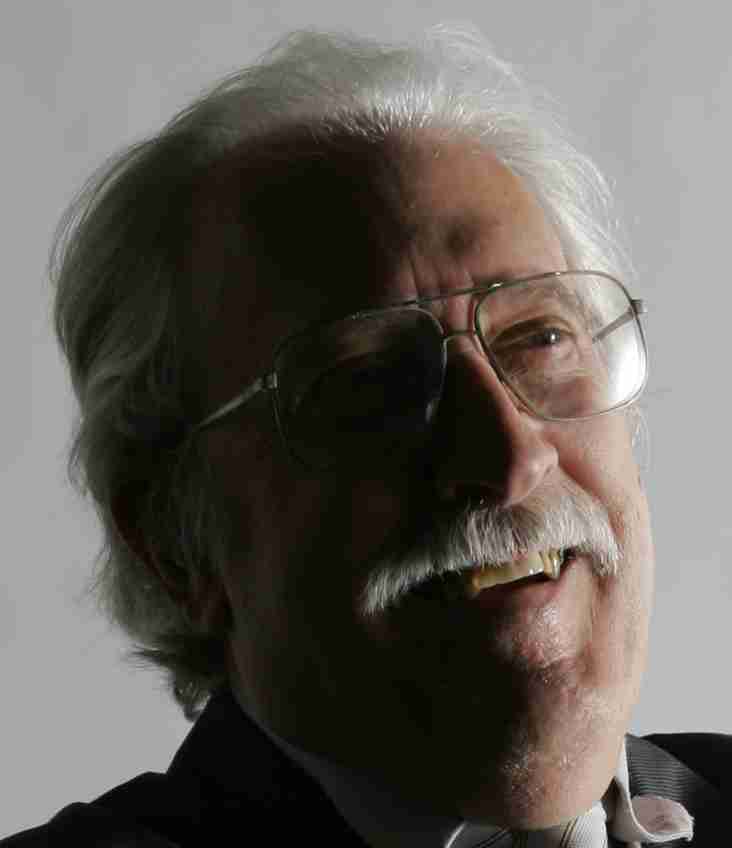
RonPrice's Profile

  • Username: RonPrice
  • Gender / Age: Male, 67
  • Location: Canada
  •  
     
    Photo Album

    1-1 of 1
     
     
    RONPRICE's Interests:

    About Me: EMPLOYMENT-SOCIAL-ROLE POSITIONS: 1943-2012 2010-2012-Retired and on a pension in George Town, Tasmania 1999-2009-Writer & Author, Poet & Publisher, Editor & Researcher. Retired Teacher & Lecturer, Tutor & Adult Educator, Taxi-Driver & Ice-Cream Salesman, George Town Tasmania Australia 2002-2005-Program Presenter City Park Radio Launceston 1999-2004-Tutor &/or President George Town School for Seniors Inc 1988-1999 -Lecturer in General Studies & Human Services West Australian Department of Training 1986-1987 -Acting Lecturer in Management Studies & Co-ordinator of Further Education Unit at Hedland College in South Hedland WA 1982-1985 -Adult Educator Open College of Tafe Katherine NT 1981 -Maintenance Scheduler Renison Bell Zeehan Tasmania 1980-Unemployed due to illness and recovery 1979-Editor External Studies Unit Tasmanian CAE; Youth Worker Resource Centre Association; Lecturer in Organizational Behaviour Tasmanian CAE; Radio Journalist ABC---all in Launceston Tasmania 1976-1978 -Lecturer in Social Sciences & Humanities Ballarat CAE Ballarat, Victoria 1975 - Lecturer in Behavioural Studies Whitehorse Technical College, Box Hill Victoria 1974 -Senior Tutor in Education Studies Tasmanian CAE Launceston, Tasmania 1972-1973 -High School Teacher South Australian Education Department 1971-Primary School Teacher Whyalla South Australia ----------ABOVE THIS LINE AUSTRALIA AND BELOW THIS LINE CANADA-------------------------------------------------------------------- 1969-1971 Primary School Teacher Prince Edward County Board of Education Picton Ontario Canada 1969-Systems Analyst Bad Boy Co Ltd Toronto Ontario 1967-68 -Community Teacher Department of Indian Affairs & Northern Development Frobisher Bay NWT Canada 1959-67 -Summer jobs-1 to 4 months each- from grade 10 to end of university 1949-1967 - Attended 2 primary schools, 2 high schools and 2 universities in Canada: McMaster Uni-1963-1966, Windsor Teachers’ College-1966/7 1944-1963 -Childhood(1944-57) and adolescence(1957-63) in and around Hamilton Ontario 1943 to 1944-Conception in October 1943 to birth in July 1944 in Hamilton Ontario --------------------------BELOW THIS LINE-----------------------BIO-DATA----------------------- 2. SOME SOCIO-BIO-DATA TO 2011 I have been married twice for a total of 44 years. My second wife is a Tasmanian, aged 65. We’ve had one child: age 34. I have two step-children: ages: 46 and 41, three step-grandchildren, ages 18, 15 and 1, as well as one grandchild aged 3 months. All of the above applies in December 2011. I am 67, am a Canadian who moved to Australia in 1971 and have written several books--all available on the internet. I retired from full-time teaching in 1999, part-time teaching in 2003 and volunteer teaching/work in 2005 after 35 years in classrooms. In addition, I have been a member of the Baha’i Faith for 52 years. Bio-data: 6ft, 230 lbs, eyes-brown/hair-grey, Caucasian. My website is found at: http://www.ronpriceepoch.com/ You can also go to any search engine and type: Ron Price followed by any one of a number of words in addition to: poetry, forums, religion, literature, history, bipolar disorder, psychology, sociology, Baha’i, inter alia, to access my writing________________________

    Interests: TMTL(too much or too many or too myriad to list)

    Favorite Music: TMTL

    Favorite Movies: TMTL

    Favorite Television: TMTL

    Favorite Books: TMTL